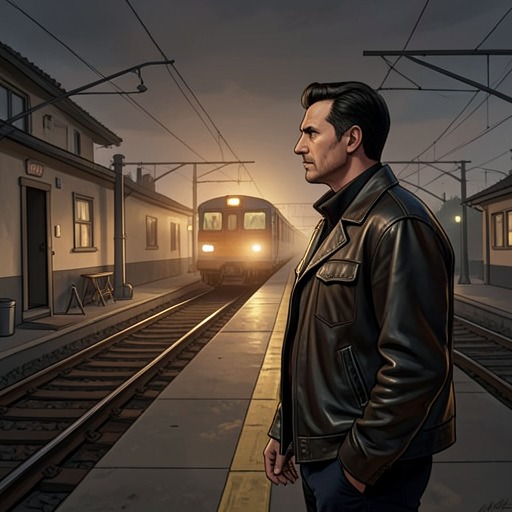
Winter 1947
Sal Meets Dean
After separating from his wife and recovering from a serious illness, Sal Paradis hears about [Dean Moriarty](entity:character-recall-character-dean-moriarty-c9a96e2099ad) through [Chad King](entity:character-recall-character-chad-king-737f5157df57)'s letters. Dean Moriarty arrives in New York with Marlene, eager for intellectual instruction but already driven by restless appetite and the desire to get moving. Sal Paradis meets Dean Mori
Winter 1947
Dean Meets Carlo
After a fruitless night searching for women, Sal accompanies Dean to his parking lot and then into the city, where Dean meets [Carlo Marx](entity:character-recall-character-carlo-marx-c29fda50c18c). Their instant recognition sparks an intense alliance of conversation and mutual fascination.
Carlo introduces Dean to the troubled, drifting circle around [Old Bull Lee](entity:character-recall-character-old-bull-lee-c40c1201ac04) and [Elmer Hassel](entity:character-recall-character-elmer-hassel-8b546cc01d19); Dean, in turn, brings Carlo stories of Western poolhall companions and his own turbulent past. Sal watches the pair’s energies join and senses that their connection will draw the whole group into a new, unpredictable orbit.
Spring 1947
Dean Heads West
As the scattered friends prepare for separate journeys, Dean leaves New York for [Denver](entity:location-recall-location-denver-bd410fc030e8) in a new suit, a watch chain, and a portable typewriter. Sal and Carlo see him off at the bus station, where they divide a photograph of themselves as a keepsake.
Sal is finishing a novel and still imagines that his own life can be planned like a straight route across the country. Dean’s departure makes the road feel newly possible, and Sal resolves to follow once spring opens the land.
July 1947
Sal Sets Out
With about fifty dollars saved, Sal leaves [Paterson](entity:location-recall-location-2778a1a002b9) for the West, expecting to reach [San Francisco](entity:location-recall-location-san-francisco-8a14902ce523) and eventually join [Remi Boncoeur](entity:character-recall-character-remi-boncoeur-6e374e499ca8) on a ship. He studies a map and decides to follow [Route 6](entity:location-recall-location-6-fd5be9274831), treating the red line as a reassuring plan for crossing America.
That confidence collapses at [Bear Mountain](entity:location-recall-location-b77d2b900cc0), where rain, poor shoes, and nonexistent traffic leave him frightened and stranded. A passing family takes him north to Newburgh, and he realizes that his chosen route is a fantasy rather than a practical way west.
July 1947
Chicago and the First Westward Ride
After returning to New York and spending much of his money, Sal takes a bus to [Chicago](entity:location-recall-location-chicago-eb77a855d5aa). He walks the city, listens to bebop, and feels that young people across the country are caught in the same restless movement.
To escape Chicago’s traffic, he rides to Joliet and begins hitchhiking. A woman driving to Iowa lets him take the wheel, carrying him across [Illinois](entity:location-recall-location-illinois-25abcbf64a4d) to [Davenport](entity:location-recall-location-3fe08c137568) and giving him his first sight of the [Mississippi River](entity:location-recall-location-44b9f53a3db0).
July 1947
Eddie Joins the Road
Stranded near [Davenport](entity:location-recall-location-3fe08c137568) after dark, Sal finds a truck ride and crosses Iowa with two drivers who trade stories and barely require him to talk. He reaches [Des Moines](entity:location-recall-location-fef3fa7c4345) exhausted, sleeps in a railway hotel, and briefly loses his sense of identity in the unfamiliar room.
On the road again, he meets [Eddie](entity:character-recall-character-eddie-2cb6e2d36340), a hitchhiker headed for [Denver](entity:location-recall-location-denver-bd410fc030e8). Sal pays for Eddie’s bus fare when they are stranded overnight in Stuart, choosing companionship over keeping his dwindling money for himself.
July 1947
Across Nebraska with Eddie
Sal and [Eddie](entity:character-recall-character-eddie-2cb6e2d36340) continue west by bus and rides, crossing Omaha and meeting a cowboy who asks them to drive one of his cars toward Grand Island. Eddie takes the wheel at reckless speed, but the cowboy reins him in and tells Sal about Depression-era freight hopping and Nebraska’s Dust Bowl years.
They are later stranded at Shelton, where a carnival owner offers them work. Sal declines, impatient to reach [Denver](entity:location-recall-location-denver-bd410fc030e8), and then loses his wool plaid shirt when Eddie accepts a ride in a contraption that can take only one passenger.
July 1947
The Minnesota Truck
A pair of cheerful Minnesota farmers take Sal aboard a crowded flatbed truck. The passengers include young harvest workers, two Ohio football players, [Montana Slim](entity:character-recall-character-montana-slim-a0c10abec91a), [Mississippi Gene](entity:character-recall-character-mississippi-gene-ffdf53a83753), and a quiet runaway boy whom Gene has taken under his care.
The ride carries Sal through the Nebraska rangelands and into Wyoming. He listens to Gene’s stories and song, learns that Gene knew [Big Slim Hazard](entity:character-recall-character-big-slim-hazard-49ada352d1d8), and feels the truck’s improvised community as a living version of the open road.
July 1947
Wild Week in Cheyenne
The truck leaves Sal and his companions in [Cheyenne](entity:location-recall-location-593061825afd) during Wild West Week. He spends money drinking with [Montana Slim](entity:character-recall-character-montana-slim-a0c10abec91a), courts a waitress, and joins a party with two women, but the evening ends in disappointment at a crowded bus station.
In the morning, Sal sees the snowy [Rocky Mountains](entity:location-recall-location-110ee6a4c8cd) and recognizes how much time and money he has wasted. He leaves the festival behind and hitches toward [Denver](entity:location-recall-location-denver-bd410fc030e8), now more intent on rejoining the gang than on chasing every passing pleasure.
July 1947
Sal Reaches Denver
A ride through Longmont brings Sal into [Denver](entity:location-recall-location-denver-bd410fc030e8), where he finds [Chad King](entity:character-recall-character-chad-king-737f5157df57) and learns that [Carlo Marx](entity:character-recall-character-carlo-marx-c29fda50c18c) is in town. The old group has split into factions: Chad, [Tim Gray](entity:character-recall-character-tim-gray-8e8456049958), and [Roland Major](entity:character-recall-character-roland-major-c9b75dba4549) have distanced themselves from Dean and Carlo.
Sal is caught between the social respectability of the Rawlins circle and the underground energy of Dean’s poolhall friends. He searches for Dean, who is already making his way through overlapping relationships and an all-night intellectual partnership with Carlo.
July 1947
Dean’s Denver Triangle
Carlo tells Sal that Dean is juggling [Marylou](entity:character-recall-character-marylou-200a6e6ecd86) and [Camille](entity:character-recall-character-camille-d423ea20efa1) while reserving long nights for their conversations. Dean’s schedule divides his attention among the two women and Carlo, who believes they are pursuing complete honesty together.
Sal finally finds Dean at Camille’s room. Dean leaves on the pretext of arranging a girl for Sal, then continues juggling appointments and promises, revealing both his extraordinary energy and his inability to remain answerable to anyone for long.
Late July 1947
The All-Night Conversation
Dean and Carlo sit face-to-face in Carlo’s basement apartment, attempting to reconstruct every thought and disagreement between them. Sal listens as their conversation spirals through remembered incidents, abstract arguments, and repeated attempts to identify an ultimate truth.
At dawn they still cannot stop talking until Sal tells them to stop the machine. The scene captures the intensity of their friendship while suggesting that its relentless pursuit of completeness may also be a form of exhaustion and self-destruction.
Summer 1947
The Central City Opera Trip
[Babe Rawlins](entity:character-recall-character-babe-rawlins-2c2876cc5604) arranges a weekend trip to [Central City](entity:location-recall-location-09c391ae7385), where Sal attends Fidelio in a suit and then helps the group clean a dusty miner’s shack for a party. The cultured opera setting and the improvised revelry of the young travelers briefly occupy the same mountain town.
The party swells with chorus singers, tourists, and rowdy visitors, then breaks into drunken fights and disorder. Sal recognizes that Dean and Carlo would have been out of place in this more conventional social scene, while he himself is being drawn toward their rougher, more radical world.
Late summer 1947
Sal Leaves Denver
After the mountain trip, Sal spends time with [Rita Bettencourt](entity:character-recall-character-rita-bettencourt-60bab4c8f6af) but finds their intimacy tentative and incomplete. He longs for a more expansive connection even as he feels his [Denver](entity:location-recall-location-denver-bd410fc030e8) stay nearing its end.
He says goodbye to his friends, retrieves the wool plaid shirt he had lent [Eddie](entity:character-recall-character-eddie-2cb6e2d36340), and buys a bus ticket to [San Francisco](entity:location-recall-location-san-francisco-8a14902ce523). Dean and Carlo may follow him west, but Sal realizes he has barely spoken to Dean during his entire stay in Denver.
Late summer 1947
Sal Arrives in Mill City
After a long bus journey through the West, Sal reaches [San Francisco](entity:location-recall-location-san-francisco-8a14902ce523) and travels to [Mill City](entity:location-recall-location-a34d5a7dc9af), where he finds [Remi Boncoeur](entity:character-recall-character-remi-boncoeur-6e374e499ca8) and [Lee Ann](entity:character-recall-character-lee-ann-4a32eb9342b3) in their shack. Remi greets him with exuberant laughter and insists that Sal follow the note on the door by climbing through the window.
Their reunion revives an old friendship, but Remi and Lee Ann’s strained household is already marked by quarrels, financial anxiety, and disappointed plans. Sal is drawn into their improvised domestic life at the edge of the Bay Area.
Late summer 1947
Sal Becomes a Guard
Sal originally intended to go to [Hollywood](entity:location-recall-location-df7336761502) to get a writing opportunity, but ended up writing only a gloomy story, which Remy almost couldn't read. To make money and tired of always being asked for cigarettes by Remy, Sal accepted a special guard job, watching over the barracks where Remy
Early autumn 1947
The Drunken Guard Shift
One night before the workers set off, Sal found the barracks noisy, with people drinking and breaking bottles. He did not maintain order but instead accepted the drinks offered by the workers, gradually getting as drunk as they did. At dawn, he hung the American flag upside down, which drew criticism from the
Early autumn 1947
The Arrest at the Barracks
Sleek insists on arresting those workers who ignore his two warnings. Sal tries to intervene, asking Sleek to be more lenient, but in the end, one person is taken away, and his companion threatens to retaliate
Autumn 1947
Remi’s Midnight Theft
Remy repeatedly thought about stealing things from the camp. At first, he tried to open the locked door, but later he just treated the mess hall as his own storage room. Sal took ice cream, meat, and other food with him. Remy joked that they were responding to President Truman's
Autumn 1947
The Banana King Dispute
Remy took Sal to [San Francisco](entity:location-recall-location-san-francisco-8a14902ce523) and insisted that he write a story about an old banana seller, calling that man "Banana King." Sal was bored with the subject, but Remy argued that focusing on the lives of ordinary people was the foundation for engaging readers. The disagreement revealed deeper differences between
Autumn 1947
The Ghost Ship Scheme
Remy, Sal, and Lee An rowed to the abandoned ship "Admiral Free." Remy searched for scrap metal, while Sal imagined himself sleeping on the ship in the fog. Remy offered Sal five dollars to spend the night on the ship
Autumn 1947
Remi’s Hollywood Failure
Remy took Sal's story to [Hollywood](entity:location-recall-location-df7336761502), hoping to sell it by leveraging his relationship with a famous director. The director was drunk and showed no interest; when they visited, they argued publicly, and Remy and Lee An returned empty-handed. This failure increased the economic and emotional pressure at home
Autumn 1947
The Racetrack Collapse
Remy spent his savings at the Golden Gate Race Track, placing big bets and also giving stolen groceries to a poor widow living in Richmond. He lost all his money and had to ride with Sal and Lee An back home. Remy tried to lie about losing his wallet, but Sal told the driver
Autumn 1947
The Step-Father Dinner
After a fierce argument between Remy and Lee An, she asked Sally to pretend that the family was harmonious and happy when her esteemed stepfather visited. Remy borrowed money to entertain the doctor, revealing her tenderness and self-respect beneath the chaos. At dinner, Sally got drunk, and
Autumn 1947
Sal Leaves Mill City
Sardo stayed for a day, climbed the mountain above [Mill City](entity:location-recall-location-a34d5a7dc9af), and looked out over the Pacific. From the top, he saw the coast and the city gradually being swallowed by thick fog, but the view did not ease his loneliness; instead, it made it stronger
October 1947
Sal Meets Teresa
Sar left from [Oakland](entity:location-recall-location-e183dc5ac6fc), traveled south through the Central Valley of [California](entity:location-recall-location-7255928c66a8), had no money and no place to stay, and finally arrived in [Bakersfield](entity:location-recall-location-04afec99dbe9). On the bus heading to [Los Angeles](entity:location-recall-location-a4be76fb5f5a), he found Theresa sitting nearby, who was the young Mexican woman he had noticed at the station, and
October 1947
The Misunderstood First Night
In [Los Angeles](entity:location-recall-location-a4be76fb5f5a), fatigue and suspicion led Sal to suspect that [Teresa](entity:character-recall-character-teresa-78f2e4445867) might be a prostitute working with pimps. Conversely, Teresa heard that Sal knew a red-haired woman in New York, and thus concluded that he must be involved in prostitution. Their accusations revealed how fear and past experiences distorted their efforts to
October 1947
A Failed Search for Work
Sar and [Teresa](entity:character-recall-character-teresa-78f2e4445867) were looking for work in [Los Angeles](entity:location-recall-location-a4be76fb5f5a). They first went to [Hollywood](entity:location-recall-location-df7336761502), then along the main street of South Los Angeles, and spent two weeks searching. They had no money, and the crowded streets and unfulfilled dreams of this city seemed unable to offer them a stable place to
October 1947
The Bakersfield Plan
Sal and [Teresa](entity:character-recall-character-teresa-78f2e4445867) took the bus to [Bakersfield](entity:location-recall-location-04afec99dbe9), hoping to find work picking grapes, but the job they expected did not appear. They drank cheap port wine with the homeless at the railway freight yard and then decided to go to Teresa's hometown, [Sabinal](entity:location-recall-location-e464910c1d9d), hoping her family could help. In
October 1947
Terry’s Family Road Life
Theresa's brother Rick and his friend Pongzo took a family out on a temporary trip to find customers who would buy manure. But most of the day was spent drinking and loitering. Sal gradually got to know Theresa's young son [Johnny](entity:character-recall-character-johnny-2b4b5b380aa0) and imagined himself belonging to this temporary family
Late October 1947
The Cotton Field Household
Sal works beside an Okie family in the cotton fields, learning how arduous the labor is and how little it pays. [Teresa](entity:character-recall-character-teresa-78f2e4445867) and [Johnny](entity:character-recall-character-johnny-2b4b5b380aa0) join him for a day, and their greater skill leaves Sal ashamed that he cannot provide adequately for them.
At night, Teresa warms food on the tent stove while Johnny draws in Sal’s notebook. For a short time, Sal feels like a man of the earth, but the cold nights and the precarious rent make the arrangement impossible to sustain.
Late October 1947
Terry Returns to Her Family
As the weather turns colder, Sal urges [Teresa](entity:character-recall-character-teresa-78f2e4445867) to return to her family with [Johnny](entity:character-recall-character-johnny-2b4b5b380aa0) rather than continue living in an unheated tent. She is hurt by his concern, but the two travel with [Ponzo](entity:character-recall-character-ponzo-88a3e85cf468) to speak with her relatives, who ultimately allow her and the child to come home.
Sal waits apart in the vineyard while Teresa’s family argues over her return. The scene makes clear that their love cannot overcome the material and familial conditions governing her life.
Late October 1947
The Barn Farewell
[Teresa](entity:character-recall-character-teresa-78f2e4445867) arranges for Sal to sleep in a barn near her family’s vineyard. They continue their relationship in secret while her father objects, and Sal spends the night among the vines listening to the family sing and argue inside their home.
In the morning, Sal tells Teresa he is leaving for New York. They part in the vineyard, turning to look back at each other before Teresa walks home carrying his breakfast plate. Their farewell ends the brief household Sal had formed with her and [Johnny](entity:character-recall-character-johnny-2b4b5b380aa0).
Autumn 1947
The Return Across America
Sal collects money sent by his aunt and hitches rapidly from [Sabinal](entity:location-recall-location-e464910c1d9d) to [Los Angeles](entity:location-recall-location-a4be76fb5f5a), retrieves his rejected screenplay from [Columbia Pictures](entity:organization-recall-organization-957e4210ce97), and buys a bus ticket as far east as his funds allow. He crosses the Southwest and the Mississippi region, then continues by rides from [Pittsburgh](entity:location-recall-location-83b39eb9c840) toward New York.
On the way, he walks beside an eccentric old hobo near the [Susquehanna River](entity:location-recall-location-0908d27b65f8), whose confused insistence that he is headed for Canada turns the eastern countryside into another kind of wilderness. Starving and nearly penniless, Sal eventually reaches [Times Square](entity:location-recall-location-4e0a39eb81ea) and borrows fare to get home.
October 1947
Sal Reaches Home
Sal returns to his aunt’s house in [Paterson](entity:location-recall-location-2778a1a002b9) and eats everything in the icebox. His aunt sees how thin and exhausted he has become, while the money he sent from [California](entity:location-recall-location-7255928c66a8) helps the family buy its first electric refrigerator.
Dean had been waiting at the house and left only two days before Sal arrived, apparently crossing his path somewhere in [Pennsylvania](entity:location-recall-location-73be460b4507) or Ohio. Their missed meeting closes Sal’s first journey without resolving his longing to travel with Dean.
Christmas 1948
Dean Arrives in Virginia
More than a year later, Sal is visiting his brother’s family in [Testament, Virginia](entity:location-recall-location-d21209d0649e), when Dean arrives in a mud-spattered Hudson with [Marylou](entity:character-recall-character-marylou-200a6e6ecd86) and [Ed Dunkel](entity:character-recall-character-ed-dunkel-92c6e52b99dc). He has driven from [San Francisco](entity:location-recall-location-san-francisco-8a14902ce523) after buying the car with his savings and wants to bring Sal back East.
Dean’s arrival disrupts the crowded family household, but he offers to help move furniture to [Paterson](entity:location-recall-location-2778a1a002b9). His restless decision to leave [Camille](entity:character-recall-character-camille-d423ea20efa1) and cross the country again signals the renewal of the road partnership.
December 1948
The Journey Behind Dean’s Arrival
Sal learns that Dean had been working on the railroad and living with [Camille](entity:character-recall-character-camille-d423ea20efa1) and their daughter, Amy, before abruptly buying the Hudson. [Ed Dunkel](entity:character-recall-character-ed-dunkel-92c6e52b99dc) had married Galatea, but he and Dean left her behind after her savings dwindled, then traveled westward through [Los Angeles](entity:location-recall-location-a4be76fb5f5a) and [Arizona](entity:location-recall-location-4abaad620253).
Dean detoured to [Denver](entity:location-recall-location-denver-bd410fc030e8) to reunite with [Marylou](entity:character-recall-character-marylou-200a6e6ecd86), and the two renewed their relationship during a night of intense lovemaking. The tale establishes the pattern of sudden reversals and broken commitments that will shape the coming trip.
Late December 1948
The Furniture Run
Dean, Sal, [Marylou](entity:character-recall-character-marylou-200a6e6ecd86), and Ed drive back and forth between [Virginia](entity:location-recall-location-beb46731c1aa) and [Paterson](entity:location-recall-location-2778a1a002b9) to move Sal’s aunt and his brother’s furniture. On the journey Dean speaks almost without pause, treating each roadside sight as a reason to talk about America, God, and the meaning of time.
A speeding ticket in [Washington, D.C.](entity:location-recall-location-2d4d72a34a07), nearly leaves the party stranded, but Sal’s aunt pays the fine. Dean later repays her, and the exhausting trip renews the bond between Sal and Dean while carrying them back into the orbit of their New York friends.
New Year's Eve 1948
The New Year’s Gathering
Back in New York, Dean’s arrival revives Sal’s restless appetite for travel, even as Sal is involved with [Lucille](entity:character-recall-character-lucille-29eaf78c77aa) and imagines marriage and a settled home. The party circuit becomes a three-day whirl of music, crowds, drinking, and changing alliances.
At [Birdland](entity:location-recall-location-birdland-bba1a7fae8d5), Dean watches [George Shearing](entity:character-recall-character-george-shearing-36620f6afd17) play and calls the vacant piano seat [God’s empty chair](entity:expression-recall-expression-god-s-empty-chair-00c07a39bf90). The performance gives a vivid form to Dean’s search for [IT](entity:expression-recall-expression-it-d846c8019d52), but the intensity of the night also heightens the strain between Sal’s desire for stability and the pull of the road.
Early January 1949
Dean’s Request About Marylou
After the parties, Dean asks Sal to sleep with [Marylou](entity:character-recall-character-marylou-200a6e6ecd86), apparently wanting to discover what she is like with another man. Sal tries to comply, but cannot proceed while Dean remains in the room and admits that his heart is not in it.
Sal withdraws, leaving Dean and Marylou together. The episode exposes the instability of their triangle and the way intimacy becomes another experiment in Dean’s endless effort to test relationships rather than settle within them.
January 1949
The Party Heads West
The group prepares to travel west again, with Dean, Sal, [Marylou](entity:character-recall-character-marylou-200a6e6ecd86), and Ed setting out after a final chaotic gathering at Carlo’s apartment. Carlo interrogates them about their purposes, but no one can offer a convincing answer for the journey.
The group leaves New York for [New Orleans](entity:location-recall-location-b21e3947bb35), convinced that moving together is their only clear purpose. Their departure renews the road’s promise while leaving unresolved the debts, marriages, and loyalties they carry with them.
January 1949
The Virginia Roadside Arrest
On the way south, Dean is stopped by [Virginia](entity:location-recall-location-beb46731c1aa) police after Ed drives recklessly. Officers question Sal and [Marylou](entity:character-recall-character-marylou-200a6e6ecd86) separately and appear to suspect a violation of the [Mann Act](entity:rule-recall-rule-mann-act-8a7f78856156), but Marylou’s marriage certificate settles the matter.
The police fine Dean and take much of the group’s travel money, deepening the travelers’ sense that authority is hostile to people without secure papers or resources. Dean responds with anger, but the party resumes its journey.
January 1949
Hyman Solomon’s Failed Help
Dean picks up Hyman Solomon, a ragged wanderer who says he can obtain money by asking Jewish households for help. The party carries him to Testament, where he promises to raise funds for gas and join them as far as Alabama.
Solomon never returns, and Dean interprets the delay and the town’s name as part of a providential pattern. The episode reinforces the group’s habit of turning failed plans into signs that the road itself is guiding them.
January 1949
The Southbound Flight
After leaving a second hitchhiker behind in North Carolina when his promised family contact fails to appear, Sal drives through the night toward Georgia. He and Dean awaken to the smell of warm grass and manure and feel that they have escaped the northern winter.
Dean quietly steals gasoline from a sleeping attendant, and the party presses on to [Mobile](entity:location-recall-location-471d40812399) and [New Orleans](entity:location-recall-location-b21e3947bb35). Their passage from winter into the South intensifies Dean’s exuberance and makes the journey feel like a liberation from ordinary restraint.
January 1949
Arrival in New Orleans
The travelers reach [New Orleans](entity:location-recall-location-b21e3947bb35) amid warm air, river smells, music, and Dean’s mounting excitement. They cross the [Mississippi River](entity:location-recall-location-44b9f53a3db0) by ferry, where Dean races around the deck and takes in the workers and the passing water.
The river crossing gathers the party’s continental journey into a single image of movement and connection. For Sal, the river also recalls old road companions and reinforces his sense that distant lives belong to one immense whole.
January 1949
Meeting Old Bull Lee
The party reaches [Old Bull Lee](entity:character-recall-character-old-bull-lee-c40c1201ac04)’s decaying house outside [New Orleans](entity:location-recall-location-b21e3947bb35), where [Jane Lee](entity:character-recall-character-jane-lee-36646ceff76c) and [Galatea Dunkel](entity:character-recall-character-galatea-dunkel-2a3bc3739056) are waiting. Old Bull returns to find his home crowded with travelers and greets Sal warmly, even as he questions the purpose of the trip and the character of the people with him.
Bull’s skeptical, learned presence contrasts with Dean’s restless certainty. His household offers the group a temporary base, but it also makes visible the consequences of their impulsive departures, especially for Galatea, whom Ed has abandoned.
January 1949
Bull’s World of Schemes
Sal observes Bull’s lifelong appetite for experience, his drug dependence, his contempt for bureaucracy, and his absorption in books and theories. Bull discusses the limitations of American bars and the danger of Dean’s compulsive, irresponsible behavior.
Bull’s household is both a refuge and a warning. His talk offers the travelers a formidable counterpoint to Dean’s ecstatic improvisation, while his own habits show how a life devoted to knowledge and sensation can become another kind of confinement.
January 1949
The Bull and Big Pop
Bull takes Sal to a betting shop in [Gretna](entity:location-recall-location-4cc42aceb6ae), where Sal notices a horse named Big Pop and thinks of his father. Bull chooses another horse, which loses while Big Pop wins at long odds.
Bull interprets the coincidence as a message from the dead and tells Sal that people may be able to communicate with another world. The moment gives Sal’s inward memories a supernatural edge, while Bull’s later frustration suggests how dangerous it can be to treat every chance event as a command.
January 1949
The Orgone Accumulator
Bull shows his visitors an [Orgone accumulator](entity:object-recall-object-orgone-accumulator-3163672e7208), a homemade box he believes can collect life energy from the atmosphere. He invites Sal and Dean to use it and treats it as part of an ongoing effort to understand the body and the world.
The contraption reflects Bull’s blend of scientific curiosity, unorthodox belief, and eccentric practicality. In the crowded household, it is one more attempt to make experience yield a system, even as the travelers remain governed by impulse.
January 1949
The Party Leaves New Orleans
Dean, Sal, [Marylou](entity:character-recall-character-marylou-200a6e6ecd86), Ed, and Galatea spend time with Bull’s family, but the crowded house and constant commotion exhaust Bull and Jane. Ed and Galatea decide to stay in [New Orleans](entity:location-recall-location-b21e3947bb35) and work, while Dean and Sal prepare to continue west with Marylou.
When Dean asks Bull for a loan and is refused, the tension between them becomes unmistakable. The party leaves in a rattling car, carrying its unresolved debts and relationships toward [California](entity:location-recall-location-7255928c66a8).
January 1949
The Texas Crossing
The three travelers cross [Louisiana](entity:location-recall-location-e662c8ad18f8) and enter the swamps, where darkness, unfamiliar roads, and a praying figure make the journey briefly feel perilous. They reach Texas, but a rainstorm, a wrong turn, and a slide into mud leave their car stuck overnight.
The next day they struggle to free the Hudson, then drive through cold, snow, and long stretches of Texas. Dean’s energy alternates between ecstatic stories and physical exhaustion, while Sal and [Marylou](entity:character-recall-character-marylou-200a6e6ecd86) endure the punishing journey with him.
January 1949
The Naked Desert Drive
On the Texas plains, Dean suddenly removes his clothes and runs through the sagebrush, urging Sal and [Marylou](entity:character-recall-character-marylou-200a6e6ecd86) to expose themselves to the sun as well. The travelers continue westward in an absurd, intimate display of their refusal to submit to ordinary expectations.
They pass through the Pecos country and reach [El Paso](entity:location-recall-location-ccc0e0d194cb) nearly broke. Dean’s behavior combines physical exuberance with an increasing disregard for social limits, while the practical problem of obtaining enough gas threatens to halt the trip.
January 1949
The Tucson Detour
Unable to afford the full journey to [California](entity:location-recall-location-7255928c66a8), Sal remembers his friend Hal Hingham in [Tucson](entity:location-recall-location-3e81e53465ef). The party reaches Hingham’s home, where his family feeds them and he lends Sal five dollars for gas.
They pick up an Okie musician who claims his guitar has been lost and asks for a ride to [Bakersfield](entity:location-recall-location-04afec99dbe9) in exchange for fuel money. The growing number of passengers makes the car a temporary refuge for people whose plans have already failed elsewhere.
January 1949
The Bakersfield Promises Fail
The travelers carry the Okie to [Bakersfield](entity:location-recall-location-04afec99dbe9), where he tries to obtain money from his brother. He eventually succeeds, but the group’s other hopes collapse when they reach [Tulare](entity:location-recall-location-94bb2521c966) and learn that the young passenger’s aunt is in jail and her grocery store is closed.
They leave Alfred near Madera and continue to [San Francisco](entity:location-recall-location-san-francisco-8a14902ce523) with only enough gas. The repeated failures of promised relatives and money sharpen the contrast between the road’s generous encounters and its constant insecurity.
January 1949
Dean Leaves Sal and Marylou
The party reaches [San Francisco](entity:location-recall-location-san-francisco-8a14902ce523), and Dean immediately drives away to see [Camille](entity:character-recall-character-camille-d423ea20efa1), leaving Sal and [Marylou](entity:character-recall-character-marylou-200a6e6ecd86) on the sidewalk with their bags and no money. They find a hotel willing to extend credit and struggle to obtain food.
Sal realizes that Marylou is chiefly trying to reach Dean through him. When she disappears with a nightclub owner, Sal is left alone and hungry, and his faith in Dean’s concern for him breaks.
January 1949
Sal’s Hunger Vision
Alone in [San Francisco](entity:location-recall-location-san-francisco-8a14902ce523) and deprived of food, Sal wanders the streets collecting cigarette butts. A frightened look from a shopkeeper opens into an elaborate vision of himself as a lost son returning to haunt his mother, and then into a mystical sense of death, rebirth, and timeless consciousness.
The vision briefly gives Sal the ecstatic revelation he has been pursuing, but hunger soon brings him back to the material city and its food. The episode shows how road exhaustion can turn deprivation into both spiritual transport and bodily need.
January 1949
Dean Rescues Sal
Dean eventually finds Sal and brings him to [Camille](entity:character-recall-character-camille-d423ea20efa1)’s home. [Marylou](entity:character-recall-character-marylou-200a6e6ecd86) has disappeared, and Camille offers a more stable welcome than Sal has experienced in the past, even though Dean’s divided loyalties remain unresolved.
Dean tries a brief job demonstrating pressure cookers, but his initial burst of energy evaporates before he sells anything. Sal watches the familiar pattern repeat: Dean throws himself into a new scheme and abandons it once its novelty fades.
January 1949
The San Francisco Jazz Night
Sal and Dean go out to hear [Slim Gaillard](entity:character-recall-character-slim-gaillard-125dfb19074d) and encounter the musicians and eccentric performers of [San Francisco](entity:location-recall-location-san-francisco-8a14902ce523)’s jazz scene. Dean treats Slim as a spiritual figure, answering his repeated playful syllables with reverent affirmations.
The night gives Dean another image of [IT](entity:expression-recall-expression-it-d846c8019d52) as a state of rhythm, surrender, and presence. Sal shares the excitement but remains aware that their time together is temporary and that he will soon have to return east.
Early 1949
Sal Leaves San Francisco
After receiving his next GI check, Sal buys food for the journey and prepares to leave [San Francisco](entity:location-recall-location-san-francisco-8a14902ce523). Dean and [Marylou](entity:character-recall-character-marylou-200a6e6ecd86) join him for one last night of jazz and wandering, but the gathering is uneasy and the group has little faith that they will meet again.
Sal departs by bus at dawn without sharing his sandwiches. The choice is petty but final in its own way, marking the exhaustion of a friendship that has repeatedly depended on the road to renew itself.
Spring 1949
A Solitary Denver Return
Sal returns to [Denver](entity:location-recall-location-denver-bd410fc030e8) expecting to settle there, but the old circle has dispersed. He works briefly in the wholesale fruit market and walks through neighborhoods filled with memories of Dean, [Marylou](entity:character-recall-character-marylou-200a6e6ecd86), and the people who once gave the city its promise.
Watching a sandlot game in the colored section, Sal longs to enter the uninhibited life he imagines around him and sees a young pitcher who resembles Dean. The scene turns his loneliness into a recognition that he cannot simply choose a new home by deciding to stay.
Spring 1949
Sal Returns West
A wealthy acquaintance gives Sal money for a trip to [San Francisco](entity:location-recall-location-san-francisco-8a14902ce523), and he travels west in a car driven by two men who identify themselves as pimps. Crossing the desert, he sees the landscape as a possible road to heaven but is more drawn to its abandoned signs and remnants.
He reaches San Francisco in the night and goes directly to Dean’s door. Dean is astonished that Sal has come and says that the time has finally arrived for them to talk, though [Camille](entity:character-recall-character-camille-d423ea20efa1)’s distress makes the reunion immediately troubled.
Early 1949
Dean’s Bad Marijuana Crisis
Dean tells Sal that he smoked too much bad marijuana while obsessively watching [Marylou](entity:character-recall-character-marylou-200a6e6ecd86). He describes days of paralysis and visionary certainty followed by terrifying nightmares, during which he became convinced that he loved Marylou and might have to kill her or die himself.
Dean says he went to Marylou armed and asked her to make a death pact, but she refused and talked him down. He later struck her, badly injuring his own thumb, which became infected and required repeated treatment and partial amputation.
Spring 1949
Camille Expels Dean and Sal
After a painful morning in [Camille](entity:character-recall-character-camille-d423ea20efa1)’s house, Camille orders Dean to pack and leave. Sal, caught in the middle of the domestic rupture, helps gather Dean’s battered belongings while the baby cries and Camille accuses him of lying.
On the street, Dean tries to convert the expulsion into an occasion for wonder, pointing out windows and the blue sky. Sal recognizes that Dean needs him and chooses not to abandon him, despite knowing that Dean’s behavior has helped produce the crisis.
Spring 1949
Sal Commits to Dean
Sal counts his money and offers to take Dean to New York and then Italy. Dean studies him cautiously, seemingly testing whether Sal’s offer is a passing impulse or a real commitment to his troubles.
Sal repeats the invitation through his embarrassment, and Dean finally accepts. The two agree to travel together and search for Dean’s father, turning their friendship from a cycle of chance reunions into a deliberate act of mutual responsibility.
Spring 1949
The Farewell to the Frisco Circle
Before leaving [San Francisco](entity:location-recall-location-san-francisco-8a14902ce523), Sal and Dean visit [Roy Johnson](entity:character-recall-character-roy-johnson-abf1701f4bde) and other acquaintances, including [Galatea Dunkel](entity:character-recall-character-galatea-dunkel-2a3bc3739056). Galatea condemns Dean for abandoning [Camille](entity:character-recall-character-camille-d423ea20efa1) and the children, while others accuse him of selfishness and irresponsibility.
Dean stands before the group, mostly silent and answering with repeated affirmations. Sal defends him and insists that Dean’s strange intensity contains something the others cannot understand, but the confrontation makes clear how badly his conduct has alienated the people around him.
Spring 1949
The Folsom Street Jazz Session
Sal and Dean go to a crowded jazz bar where a tenor saxophonist drives the room into a fever of music. Dean stands before the horn, sweating and urging the musician onward, while the crowd responds as if the performance were a shared revelation.
The music gives Sal a powerful impression of [IT](entity:expression-recall-expression-it-d846c8019d52): the player seems to fill the moment with the life and strain everyone present recognizes. The scene becomes a concentrated expression of their belief that music can suspend ordinary time and disclose a collective inner truth.
Spring 1949
The Last San Francisco Night
Sal and Dean continue through the night with jazz musicians, [Roy Johnson](entity:character-recall-character-roy-johnson-abf1701f4bde), and companions from their wider circle. They drink at Walter’s home, where Walter’s wife silently accepts the late-night gathering, and later persuade an old railwayman to let them sleep in his room.
At dawn, Sal and Dean retrieve their bags and leave [San Francisco](entity:location-recall-location-san-francisco-8a14902ce523) by a travel-bureau car. Sal is reluctant to go, but Dean’s urgency and their shared sense of motion carry them eastward once more.
Spring 1949
Dean Explains IT
On the eastbound ride, Dean explains that [IT](entity:expression-recall-expression-it-d846c8019d52) appears when a musician finds the phrase everyone is waiting for and sustains it until time seems to stop. Sal answers by recalling childhood fantasies of cutting down scenery from moving cars, and Dean responds with a story of traveling Nebraska with his father to sell homemade flyswatters.
Dean remembers the trip ending in his father’s drunken disappearance and his own pleading before a judge. Their stories converge in a shared understanding of childhood imagination, poverty, and loss, while their excited conversation leaves the other passengers unnerved.
Spring 1949
The Cadillac Crossing
The party travels east in a borrowed car, with Dean driving recklessly and repeatedly demonstrating how little he fears speed. In Iowa, a minor collision and a police stop briefly interrupt the journey, but the group is eventually cleared to continue.
The passengers witness Dean’s exhausting, high-risk style and quietly fear for their safety. His ability to treat danger as another spectacle deepens the contrast between his faith in motion and the ordinary travelers’ need for caution.
Spring 1949
The Chicago Bop Night
The borrowed car reaches [Chicago](entity:location-recall-location-chicago-eb77a855d5aa), where Sal and Dean wash up, eat, and spend the night following musicians through clubs. Dean listens to a new generation of jazz players and is overwhelmed when [George Shearing](entity:character-recall-character-george-shearing-36620f6afd17) appears and plays.
The music renews Dean’s conviction that something more lies beyond each performance. By morning the car is battered from their reckless driving, and the pair return it to its owner before moving on.
Spring 1949
The Detroit Night
Sal and Dean take a bus to [Detroit](entity:location-recall-location-detroit-c63f400ec324) and spend the night in a rundown all-night movie theater with bums, workers, couples, and drifters. The repeated films create a strange blend of Western and Eastern myths that settles into Sal’s subconscious.
At dawn they leave for another travel-bureau ride, carrying the accumulated exhaustion of their journey. Detroit’s social wreckage makes visible the people who live at the end of the road, with no stable home or direction.
Spring 1949
Dean Reaches New York
A new driver carries Sal and Dean from [Detroit](entity:location-recall-location-detroit-c63f400ec324) toward New York, and Dean takes the wheel for the final stretch. They arrive at Sal’s aunt’s home on [Long Island](entity:location-recall-location-long-island-f692f10da472), where she allows Dean to stay only a few days.
Sal and Dean walk beneath the streetlamps and agree that they will remain friends. Yet the ocean leaves no further road east, and their promise cannot resolve the growing distance between their restless lives and the responsibilities gathering around them.
A few days after the spring 1949 arrival
Dean Meets Inez
At a New York party, Sal introduces Dean to [Inez](entity:character-recall-character-inez-496856b151b1), describing him as a cowboy. Dean kneels beside her and promises her everything, and within days they begin arranging a divorce from [Camille](entity:character-recall-character-camille-d423ea20efa1) so they can marry.
The new relationship quickly expands Dean’s family, while Camille gives birth to another child from their earlier relationship. Dean’s repeated commitments continue to multiply his responsibilities without making him any more capable of settling into them.
Spring 1949
Sal’s Denver Interlude
Sal receives money from selling his book, helps his aunt, and heads west again when spring makes New York feel confining. He leaves Dean behind for the first time, while Dean works in a parking lot and lives with [Inez](entity:character-recall-character-inez-496856b151b1).
The separation marks a change in their friendship: Sal is no longer simply following Dean’s departures. Dean is quieter and speaks of a possible family life, though his battered trunk remains ready beneath the bed.
Spring 1949
Dean’s New York Domestic Life
Sal visits Dean at the parking lot and in his cold-water apartment, where Dean describes plans to live on a farm with [Inez](entity:character-recall-character-inez-496856b151b1) and raise children. He also speaks of his father, who has written from jail and may someday come to New York, and of a younger sister whose whereabouts are unknown.
Dean’s hope for a home sits beside his enduring readiness to leave. His conversation suggests a new awareness of the people who depend on him, but it does not quiet the road’s pull.
Late spring 1949
The Last Visit Before Mexico
Dean visited Sal's aunt, paid back the money he owed her, and played several ball games with Sal and the children nearby. He admitted that [Inez](entity:character-recall-character-inez-496856b151b1) insisted on staying with the child about to be born, and mentioned that Marylu has also married and is expecting
Summer 1949
The Ghost and Henry Glass
On the way west by bus, Sal met [Henry Glass](entity:character-recall-character-henry-glass-97fe3064e584). He was a young man who had just been released from federal prison for stealing a car. Henry told Sal about prison life and the taboo of not talking about the release date. He also asked Sal to look at him so that he wouldn't
Summer 1949
Stan Plans Mexico
Stan Shepard told Sal he wanted to get rid of the conflict with his grandfather and go to [Mexico](entity:location-recall-location-f1c6a91e03ea) with Sal. Sal agreed, and the two spent a week with [Tim Gray](entity:character-recall-character-tim-gray-8e8456049958) and Beb Robins, drinking, listening to jazz, and enjoying the brief time spent with a group of friends. After failing
Summer 1949
Dean’s Return to Denver
Dean and [Roy Johnson](entity:character-recall-character-roy-johnson-abf1701f4bde) and a group of old friends came to [Denver](entity:location-recall-location-denver-bd410fc030e8), announcing they intended to take Sal to [Mexico](entity:location-recall-location-f1c6a91e03ea). He explained that he came there to handle the divorce proceedings in Mexico, to retrieve a railway pocket watch, and also to find his father
Summer 1949
The Windsor Hotel Revelry
[Denver](entity:location-recall-location-denver-bd410fc030e8)'s group spent the night drinking and celebrating at the [Windsor Hotel](entity:location-recall-location-windsor-hotel-662c146b3160). It was a place where Dean and his father once lived together. Dean seemed to inhabit his father's ghost, drinking and shouting among a group of released convicts and old gold miners. The gathering moved to another location, and finally
Summer 1949
Stan Leaves His Grandfather
Before leaving for [Mexico](entity:location-recall-location-f1c6a91e03ea), stan's grandfather begged him not to go, recalling the childhood scene when he took him to the park. Stan would not stay; although the old man was sad, sar and dean took him away. Stan's mother gave him some money and asked the companions to look after him
May 1950
South Through Texas
Dean, Sal, and Stan got into a run-down 1937 Ford car and set off south through Colorado, entering Texas. A strange insect bite caused Sal's arm to swell; they hadn't even left their hometown yet, and the journey was already filled with an ominous atmosphere. They
May 1950
San Antonio’s Night Streets
In [San Antonio](entity:location-recall-location-san-antonio-9e69384c5ddf), travelers took Stan to the clinic to check his swollen arms. While he was waiting, Dean and Sal wandered through the Mexican neighborhood, entering a pool hall and watching other players tease a small boy with a disability. Dean recognized a familiar outsider's situation from the boy and imagined the private
May 1950
Crossing into Mexico
Late at night, travelers arrived in La Raza exhausted, then crossed the bridge into [Nuevo Laredo](entity:location-recall-location-nuevo-laredo-3d030e0f2dd4). Mexican officials checked their documents with a relaxed and friendly attitude, which surprised Dean; he had half his life believed that police would suspect him. They exchanged money, ate, and then walked into
May 1950
The First Mexican Dawn
At dawn, a group drove through the desert toward Sabina Ibarra. Dean was deeply attracted by the town's muddy streets, donkeys, and residents beginning their day. He thought the quiet and straightforward appearance of the locals reflected a kind of human nature that had been lost in America, one
May 1950
The Mountain Road
Beyond Monterey, Dean drove through hotter lowlands and dense swamps, pointing out huts, workers, and homes along the way. While others slept, Sal took over driving, reflecting on the indigenous people he saw in his eyes, and the world they represented—a distant, less industrialized
May 1950
Victor’s Invitation
Near [Gregoria](entity:location-recall-location-gregoria-549c3e56f3f7), Sal joked that he would find a girl for Dean, and [Victor](entity:character-recall-character-victor-046c8bf7b3bc) walked over to the car and offered to arrange one. Dean immediately woke up, excited about the local boys, their slow pace, and the opportunity to enter a social world he didn't understand
May 1950
The Desert Marijuana Gathering
[Victor](entity:character-recall-character-victor-046c8bf7b3bc)'s family and the travelers shared a huge marijuana smoke. Everyone gradually got drunk, and Dean was amazed by the expressions on his brothers' faces, trying to figure out what they were talking about regarding Americans
May 1950
Gregoria’s Mambo and Brothel
[Victor](entity:character-recall-character-victor-046c8bf7b3bc) led a group to a dance hall and brothel. The loud mambo music filled the room, drawing onlookers to the windows. Dean and Sal danced and drank among the women, while Stan was reluctant to leave. The entire afternoon became a fervent spectacle. Sal was attracted to
May 1950
The Hot Jungle Night
After leaving Gregoriana, the travelers entered the tropical jungle, the car lights first went out, then flickered back on. They stopped at Limon, where the heat and mosquitoes made it almost impossible to sleep; Sal lay on the roof of the car until the jungle seemed like part of his
May 1950
The Sierra Madre Ascent
The travelers climb into the [Sierra Madre Oriental](entity:location-recall-location-sierra-madre-orienta-5c3f12a67b4f), where the road passes steep farms, high huts, and mountain communities largely isolated from the world beyond the highway. Dean slows repeatedly to watch the people and imagines the limits of a child’s life on a remote ledge.
When young girls sell crystals, Dean trades a wristwatch for a small stone. Their running after the departing car moves him deeply, and he wonders how far their loyalty and wonder might carry them into the world they have barely seen.
May 1950
The Last Plateau
[The road](entity:concept-recall-concept-the-road-683095d6602b) rises from the mountains onto a high plateau, where shepherds and old missions appear in the fading light. Sal urges Dean to wake and see the landscape, but Dean catches only a glimpse before falling asleep again.
The sight gives Sal one of the journey’s clearest images of an ancient, pastoral world. By evening the travelers reach the outskirts of [Mexico City](entity:location-recall-location-125cbd03b250), convinced that they have come to the end of the road and the beginning of something larger.
May 1950
Arrival in Mexico City
The travelers descend into [Mexico City](entity:location-recall-location-125cbd03b250) and plunge into its crowded traffic, where Dean drives through the roundabouts with exhilaration. They wander through markets, bars, alleys, and night streets, encountering music, food, beggars, families, and workers in a city that seems to continue without pause.
Sal experiences the city as the culmination of the road’s promise: an immense, living world outside the routines of the [United States](entity:location-recall-location-united-states-2f533bc8d0b9). Their ecstatic tour lasts until dawn, but its intensity soon gives way to illness and exhaustion.
May 1950
Sal’s Fever and Dean’s Departure
Sal develops dysentery and becomes delirious in [Mexico City](entity:location-recall-location-125cbd03b250). As he lies ill, Dean tells him that he has obtained his divorce from [Camille](entity:character-recall-character-camille-d423ea20efa1) and plans to return to [Inez](entity:character-recall-character-inez-496856b151b1) in New York, then leaves without waiting for Sal to recover.
When Sal understands that Dean is gone, he feels abandoned but also recognizes the competing obligations that have shaped Dean’s life. The departure ends their Mexican journey and leaves Sal to recover with Stan’s help.
After the Mexico trip in 1950
Dean’s Marital Return
Dean drives north from [Mexico City](entity:location-recall-location-125cbd03b250), sees [Victor](entity:character-recall-character-victor-046c8bf7b3bc) again in [Gregoria](entity:location-recall-location-gregoria-549c3e56f3f7), and continues until the Ford’s rear end fails near [Lake Charles](entity:location-recall-location-lake-charles-e8fcf64d2cc0). He flies to New York, marries [Inez](entity:character-recall-character-inez-496856b151b1), then immediately boards another bus west to rejoin [Camille](entity:character-recall-character-camille-d423ea20efa1) and their daughters.
The sequence leaves Dean three times married, twice divorced, and living again with his second wife. His attempt to settle one relationship repeatedly generates another departure, making his domestic life as restless and cyclical as the road.
Autumn 1950
Sal Meets Laura
Returning from [Mexico](entity:location-recall-location-f1c6a91e03ea), Sal hears an old man on the road say, “[Go moan for man](entity:expression-recall-expression-go-moan-for-man-27a5db12cb21),” a phrase he cannot fully interpret. In New York, he calls up to a loft where friends may be gathered and meets [Laura](entity:character-recall-character-laura-e8b3bd8aefc4), whose gentle presence answers a long-held hope for love.
They decide to love each other and plan to move to [San Francisco](entity:location-recall-location-san-francisco-8a14902ce523) in a jalopy truck. Sal writes Dean about the plan, and Dean promises to come and select the vehicle, giving the couple six weeks to save money.
Late autumn 1950
Dean’s Unexpected Visit
Dean arrives in New York five and a half weeks before the planned move, despite having no money to help buy the truck. He enters Sal and [Laura](entity:character-recall-character-laura-e8b3bd8aefc4)’s room quietly, tries to explain that he can no longer talk as he once did, and then begins recounting his recent journey in meticulous detail.
He admits that he does not know why he came, though he is glad to see Sal and Laura. He leaves again after three days, carrying his railroad passes and unresolved obligations back across the country.
Late autumn 1950
Dean’s Last Departure
Dean returns west by train after [Inez](entity:character-recall-character-inez-496856b151b1) throws him out. A letter from [Camille](entity:character-recall-character-camille-d423ea20efa1) expresses longing for him and welcomes the possibility that Sal and [Laura](entity:character-recall-character-laura-e8b3bd8aefc4) might someday live nearby, suggesting that Dean’s most constant domestic bond remains with Camille and their children.
Sal later sees Dean outside a Cadillac on a cold New York night, ready to go to Penn Station. Remi refuses to let Dean ride with them to a concert, and Sal watches his old friend walk away alone, unable to alter the final separation.
Near the ending
Sal Thinks of Dean
After Dean disappears from view, Sal reflects on the immense land stretching west from [New Jersey](entity:location-recall-location-new-jersey-25586b9a9d1c) and on the people dreaming across its roads. He thinks of the children crying in Iowa, of growing old, and of the uncertainty that surrounds every life.
His thoughts return to Dean and to [Old Dean Moriarty](entity:character-recall-character-old-dean-moriarty-0c7f36758e5f), the father they never found. The novel ends not with a destination or reunion but with Sal’s enduring act of remembering the man whose restless presence changed the meaning of the road.